Deficit Deadlift - 3 Top Tips From A Glasgow Personal Trainer
Deficit Deadlift - 3 Top Tips From A Glasgow Personal Trainer
The deficit deadlift is one of the most effective variations for improving your conventional deadlift. By standing on a small platform (usually 2–3 inches), you increase the range of motion and teach your body to generate more power from a deeper starting position.
Traditionally, this is said to build strength off the floor, improve hip and ankle mobility under load, and expose weak points that a regular deadlift can hide. However, there is a school of thought that despite this common claim, deficit deadlifts can be especially useful for developing strength at lockout. The longer pull and greater challenge of completing the lift demand more from the upper back, glutes, and overall finishing power.
Regardless of how you view the lift, it is an excellent exercise for bringing up weaknesses in the deadlift and can have a great transfer to developing traditional deadlifts.
Here are three top tips to get the most out of deficit deadlifts while staying safe and progressing consistently.
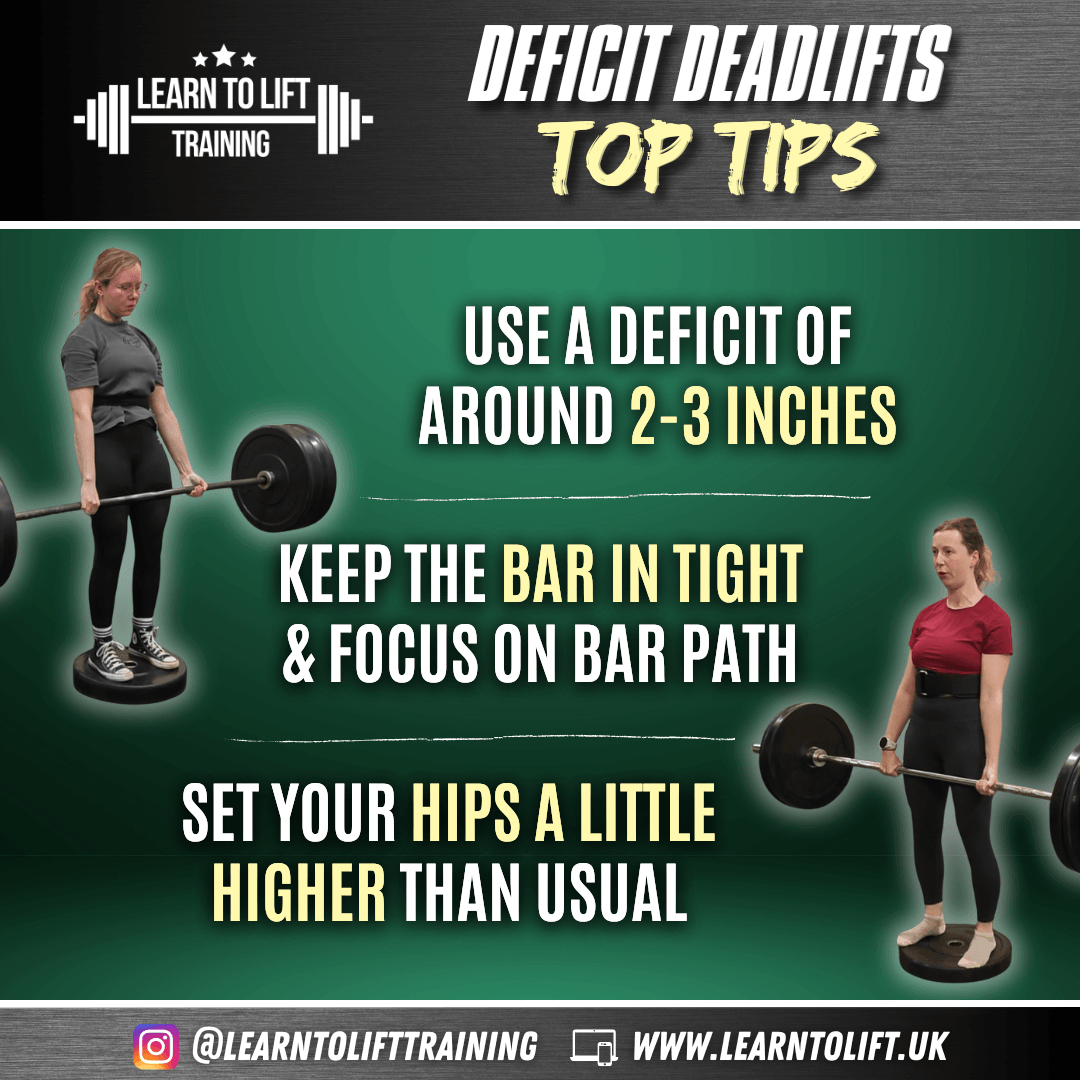
1. Use a 2–3 Inch Deficit and Prioritise Position Over Load
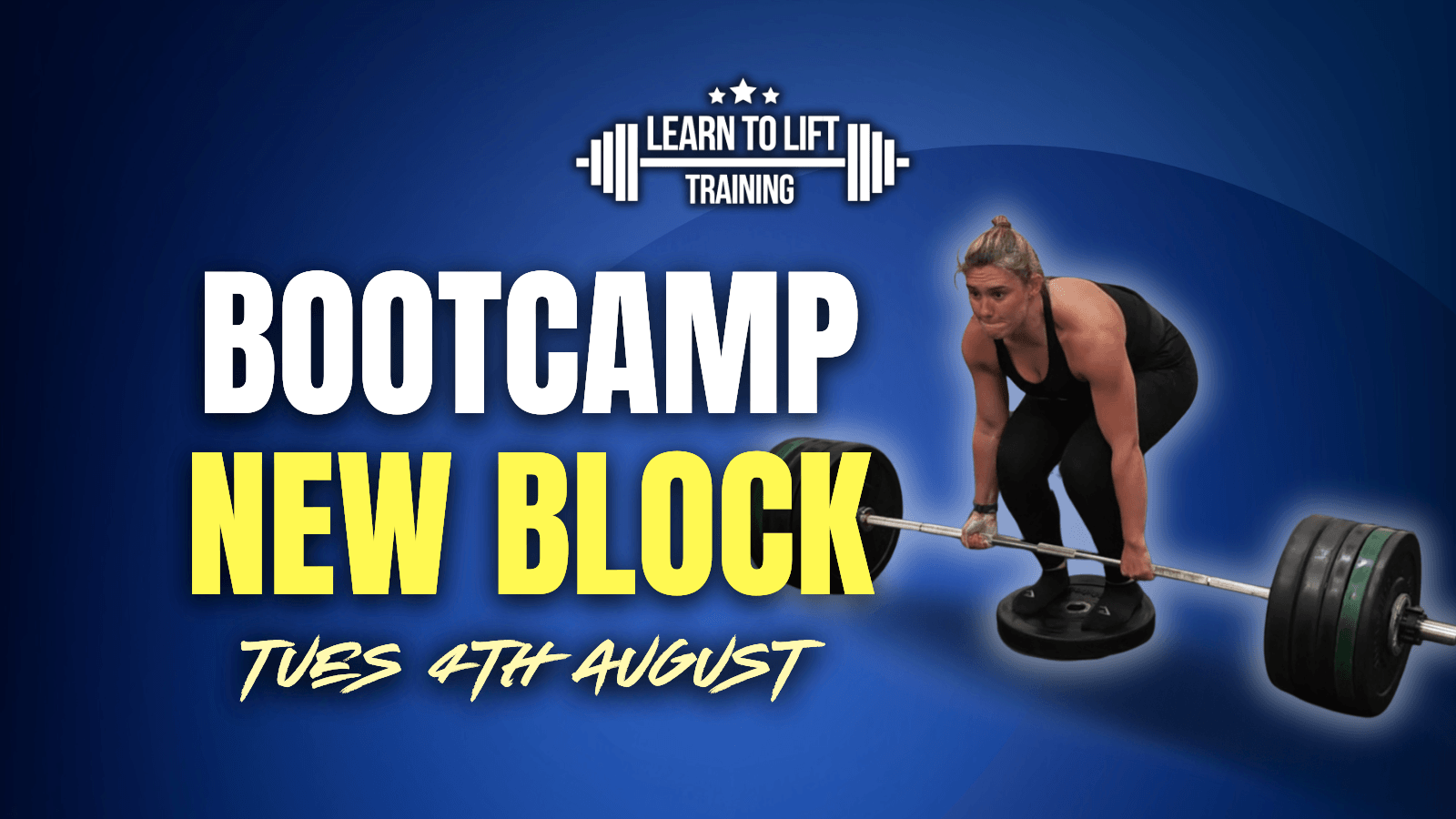
A 2–3 inch deficit works well for most lifters. If you have blocks or mats, stand on those. If not, a 20 kg bumper plate can work well as a simple and effective alternative.
Focus on maintaining a strong starting position: chest up, lats engaged, bar close to the shins, and a braced core. Deficit deadlifts are more challenging than traditional deadlifts due to the higher start position and longer range of motion, so you will more likely use weights that are a bit less than your regular deadlift. This helps you maintain solid technique and make better long-term progress.
2. Keep the Bar in Tight and Focus on the Bar Path
Because the bar starts lower, the initial pull relies more heavily on the quads and the ability to drive the floor away. Think about pushing your feet through the platform rather than yanking the bar with your back. At the same time, keep the bar as close to your body as possible—any forward drift makes the lift significantly harder and increases shear on the lower back.
A useful cue is to feel like you’re “wedging” yourself under the bar and then driving the hips forward once the bar clears the knees. Filming from the side can quickly reveal whether your hips are rising too fast or the bar is drifting away.
3. Set Your Hips a Little Higher Than Usual
Because the bar starts lower relative to your body, setting your hips in the exact same position as a regular deadlift can leave you too low and make it harder to generate force. Instead, set your hips a little higher than you normally would.
This slight adjustment improves your starting leverage, helps keep the bar closer to your body, and reduces the chance of the hips shooting up or the lower back rounding. Find a position where you can still feel tension in the hamstrings and glutes while maintaining a strong, braced torso.
Learn How to Master Deficit Deadlifts in Glasgow
Deficit deadlifts are a powerful tool when used with patience and good technique. Master solid form with a 2–3 inch deficit, stay disciplined with bar path and leg drive, and set your hips a little higher than usual for better leverage. Done correctly, they can help strengthen weak areas of your deadlift and build toward new PBs on traditional deadlifts when you switch back to them.
Apply these tips consistently and you’ll build a more complete, powerful deadlift. Ready to take your lifting further? Get in touch about
personal training in Glasgow or Join the
Learn To Lift Bootcamp and get structured coaching to turn these principles into lasting results.